

Intro to Filed
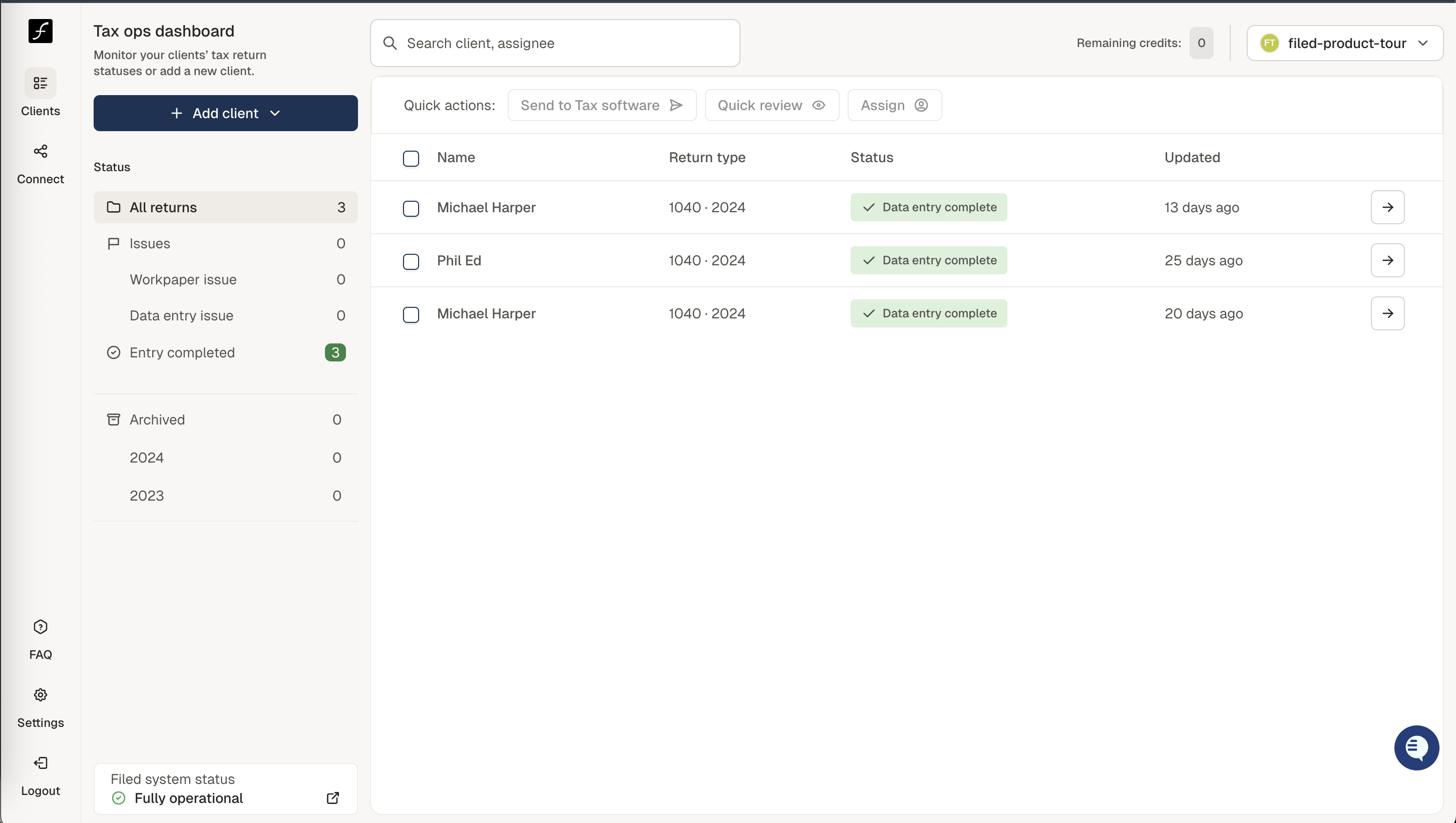
A typical medium complexity tax return that used to take 2 to 3 hours to prepare can now be done in 20 to 30 minutes with Filed
Why using AI to prepare tax returns is harder than it looks
What is in a tax return - a short primer
A tax return is basically an exercise to figure out your total taxable income and what that means how much tax you owe or get back.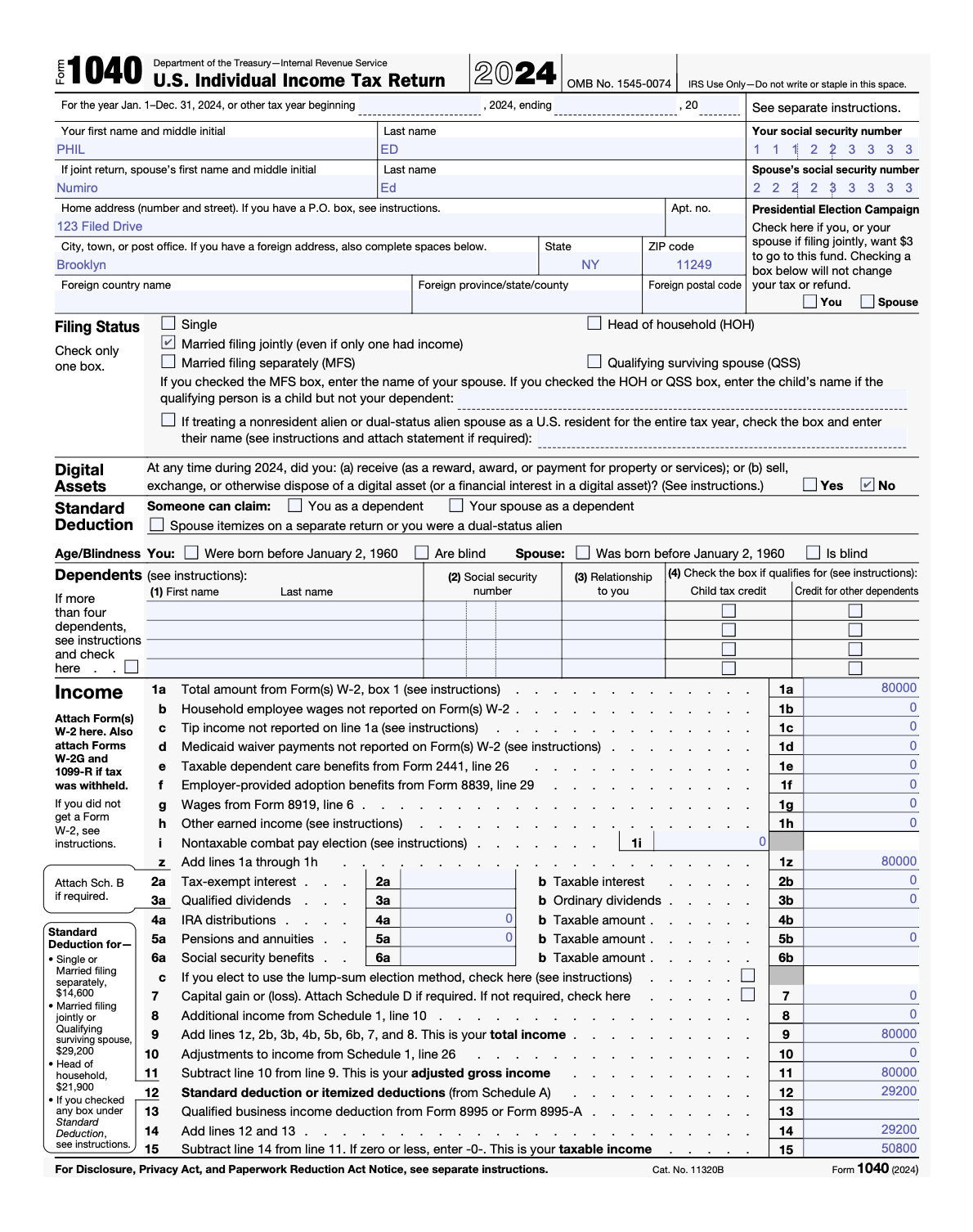
- You start with everything you earned: wages, investments, side gigs, etc.
- You subtract things the IRS says shouldn’t be taxed (retirement contributions, HSA deposits, etc.).
- You then take deductions (standard or itemized) to get to your taxable income.
- From that, you calculate how much tax you owe using IRS rates.
- Finally, you compare it to how much tax you’ve already paid (through paycheck withholdings or estimated payments).
Why is this a hard problem for AI?
Problem 1
Large amount of contextual data
Problem 2
Lack of contextual data
Problem 3
Accuracy & trust requirements
Problem 1: Large context: Solving the needle-in-a-haystack problem
A tax preparer typically gets 100s of pages of documents from their clients. These documents are often in different formats - paper, pdf, images, etc. and often don’t have any explanations. Even if they have explanations, they are often not very detailed. Humans are good at handling a large amount of background context almost instantly. A human tax preparer can figure out and keep track of all the people in a tax return, how they are related to each other, what their financial situation is, etc. In order to get AI to do this effectively today, we need multiple AI agents who work on specific parts. And where there are multiple people (AI Agents here) we need a plan to orchestrate their work.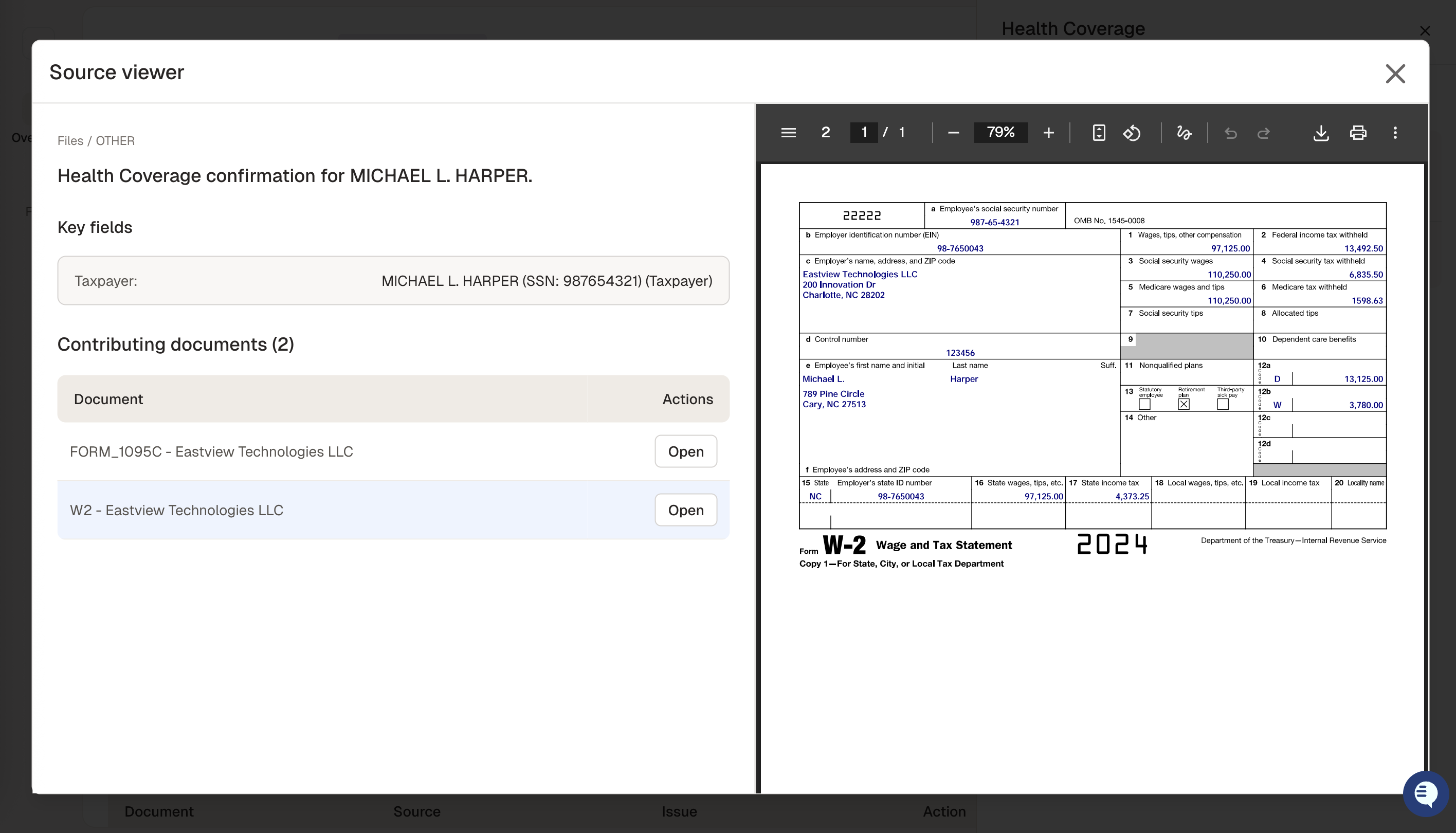
Filed: AI with a plan
Analyze prior year
Analyze the prior year tax return and uncover insights - missing documents, errors and financial details, complexity.
Create a plan
Create a plan for the current year tax return - break down the documents into smaller tasks
Create workpaper
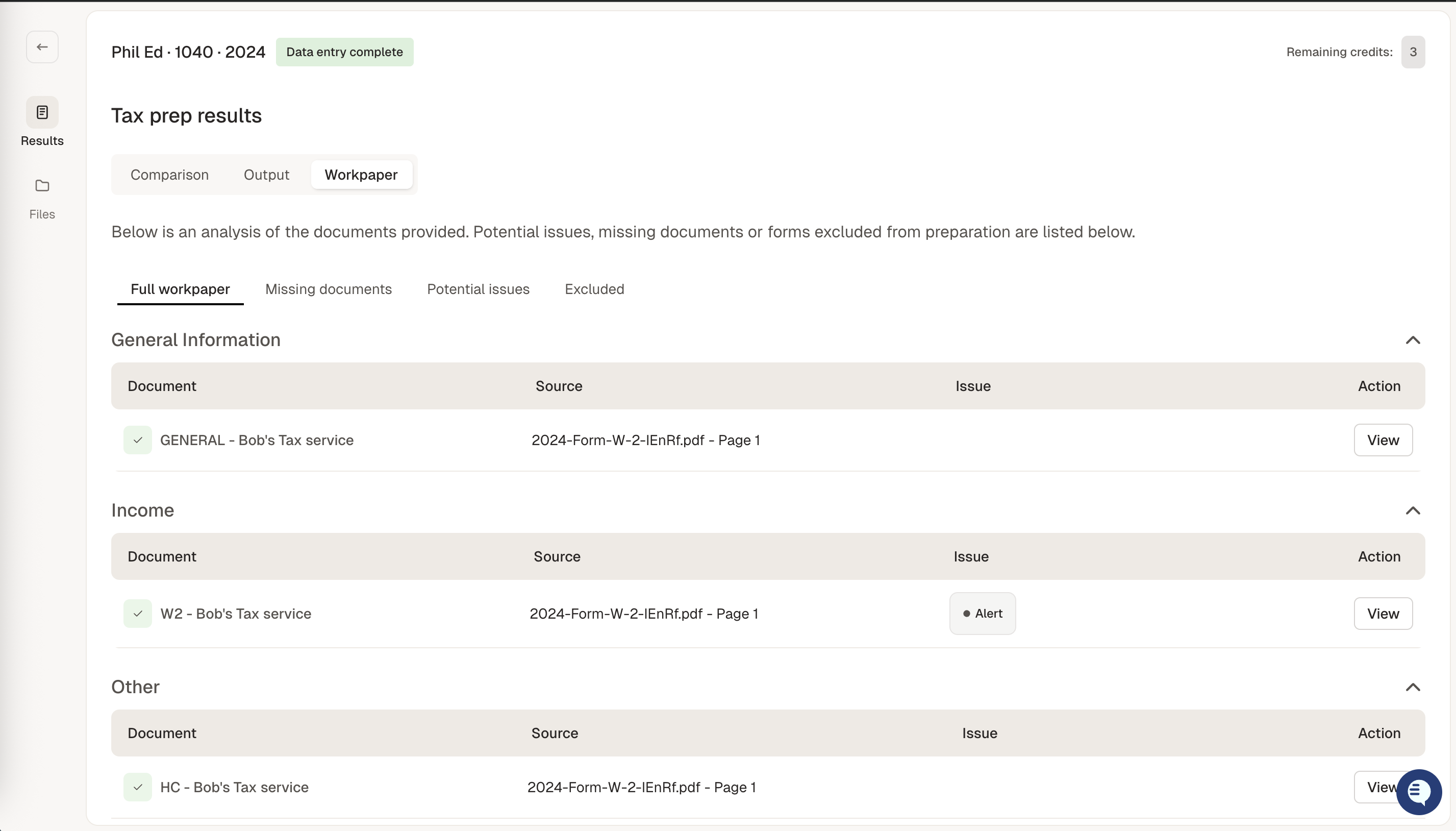
Create a workpaper - to keep track of what the AI is doing and what the tax preparer needs to do to finish the tax return
Problem 2: Missing context: Figuring out what’s missing before agents do work
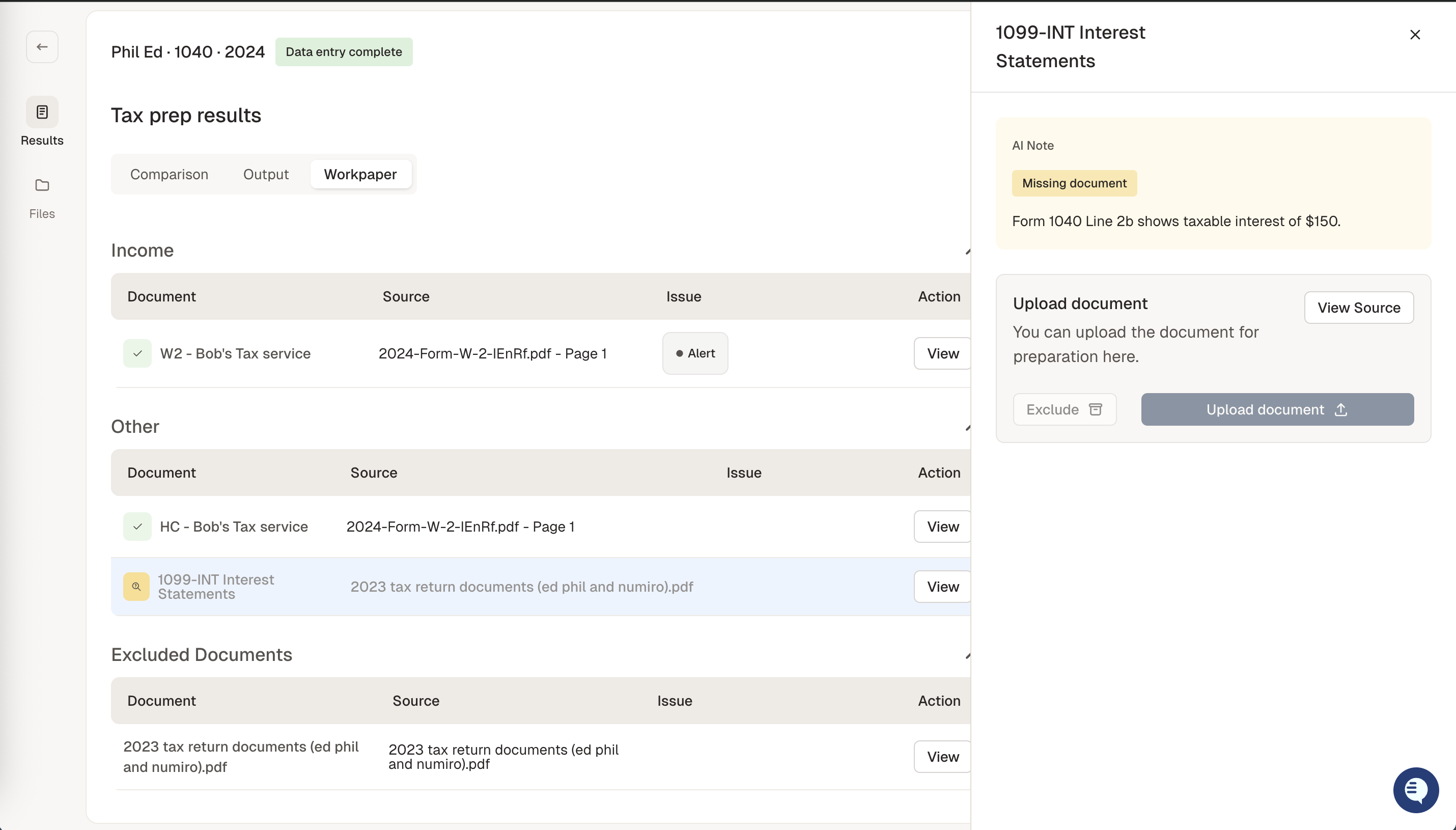
Analyze prior year return
The prior year agent looks at the prior year tax return of the client and list down all the possible documents that the client needs to submit this year. It does this even before looking at the current year source documents.
Confirm document presence
Then the agent looks through the current year source documents and confirms if the documents are present or not. If not, it lists down the specific reason why the document is missing and why it is needed.
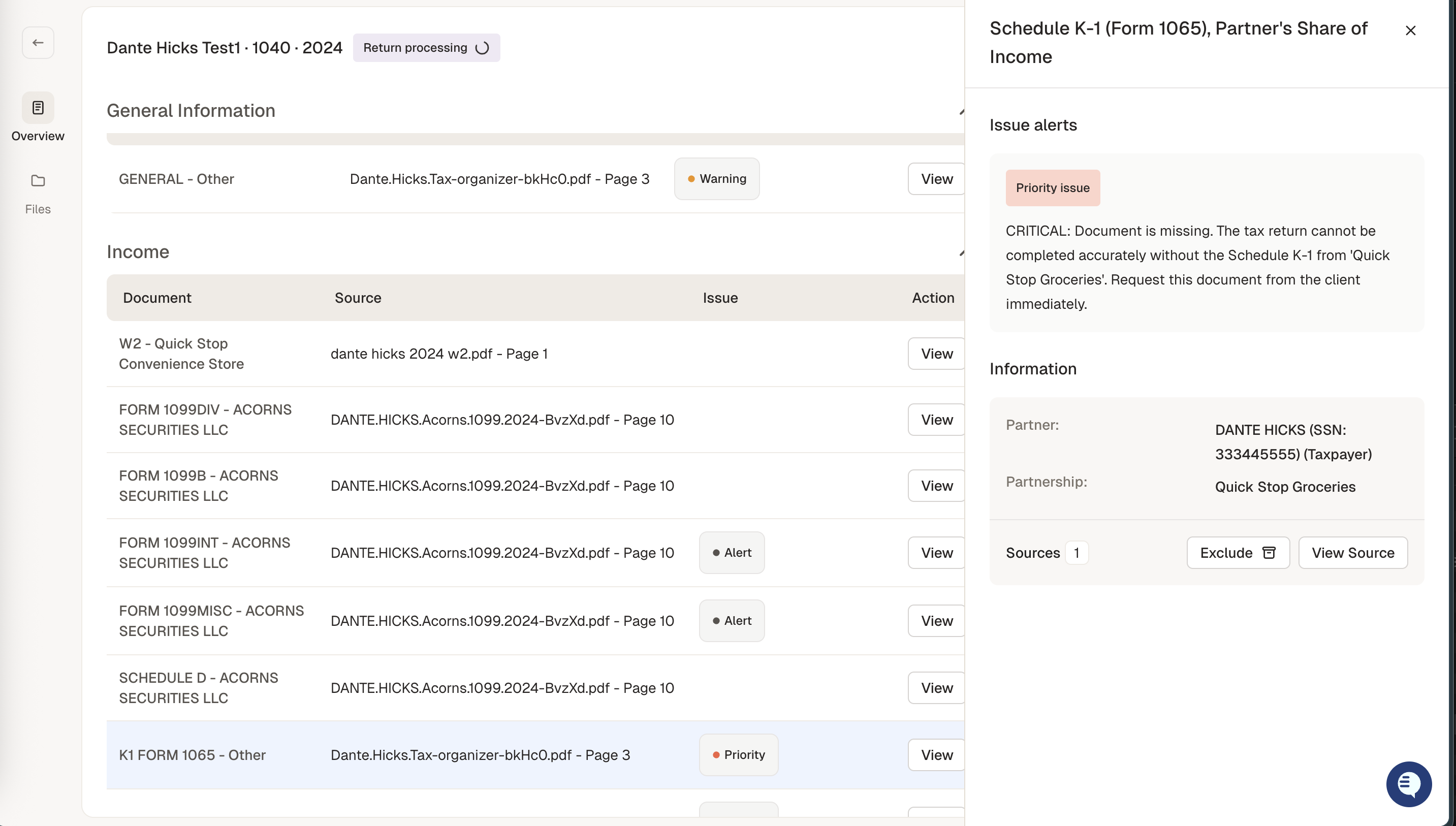
Problem 3: Accuracy & trust: How do we build trust with AI?
Today when we use AI agents or ChatGPT in general, we often see a disclaimer that the output that the AI gives is not guaranteed to be accurate and should be verified by a human. We call this problem with a very popular name - “hallucinations”. This is the hardest problem we had to solve. Filed solved this using two clever approaches:Guardrails
Constrained pathways that guide AI behavior
Transparency
Clear handoff with workpapers for human review
Guardrails
We built a proprietary guardrails system that guides the AI to follow specific rules and pathways.- These pathways and rules are defined by a tax engineer (our CPAs who train the AI)
- These handcrafted rules and pathways ensure that the AI has a limited paths it can take to the solve a specific problem while preparing a tax return
- Think of our AI as the chef in a restaurant. The chef has to make the dish but the recipe — the ingredients, techniques, and plating styles are created by our CPAs. The chef can make minor adjustments to balance the flavor but never invents random recipes.
Transparency
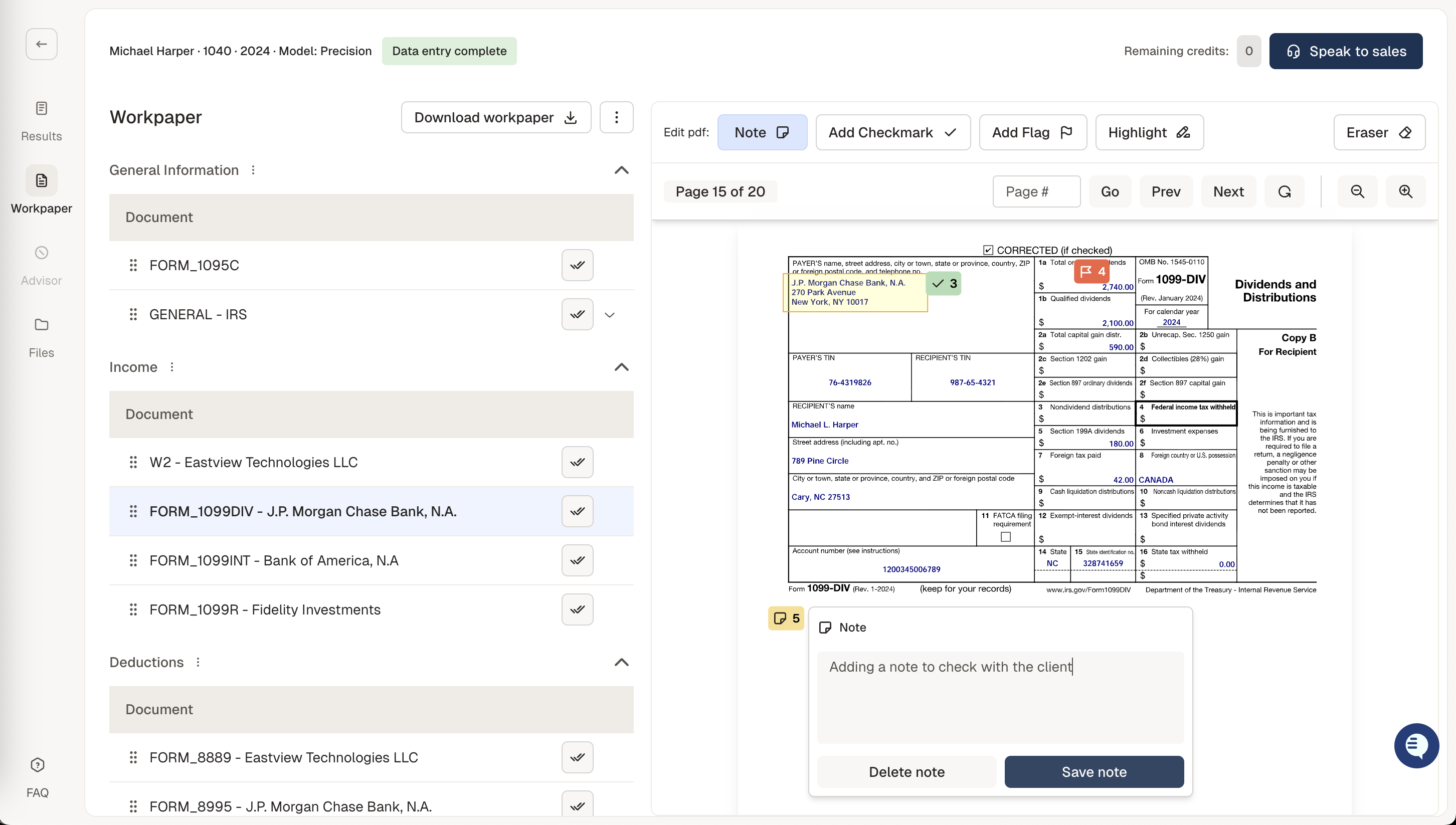
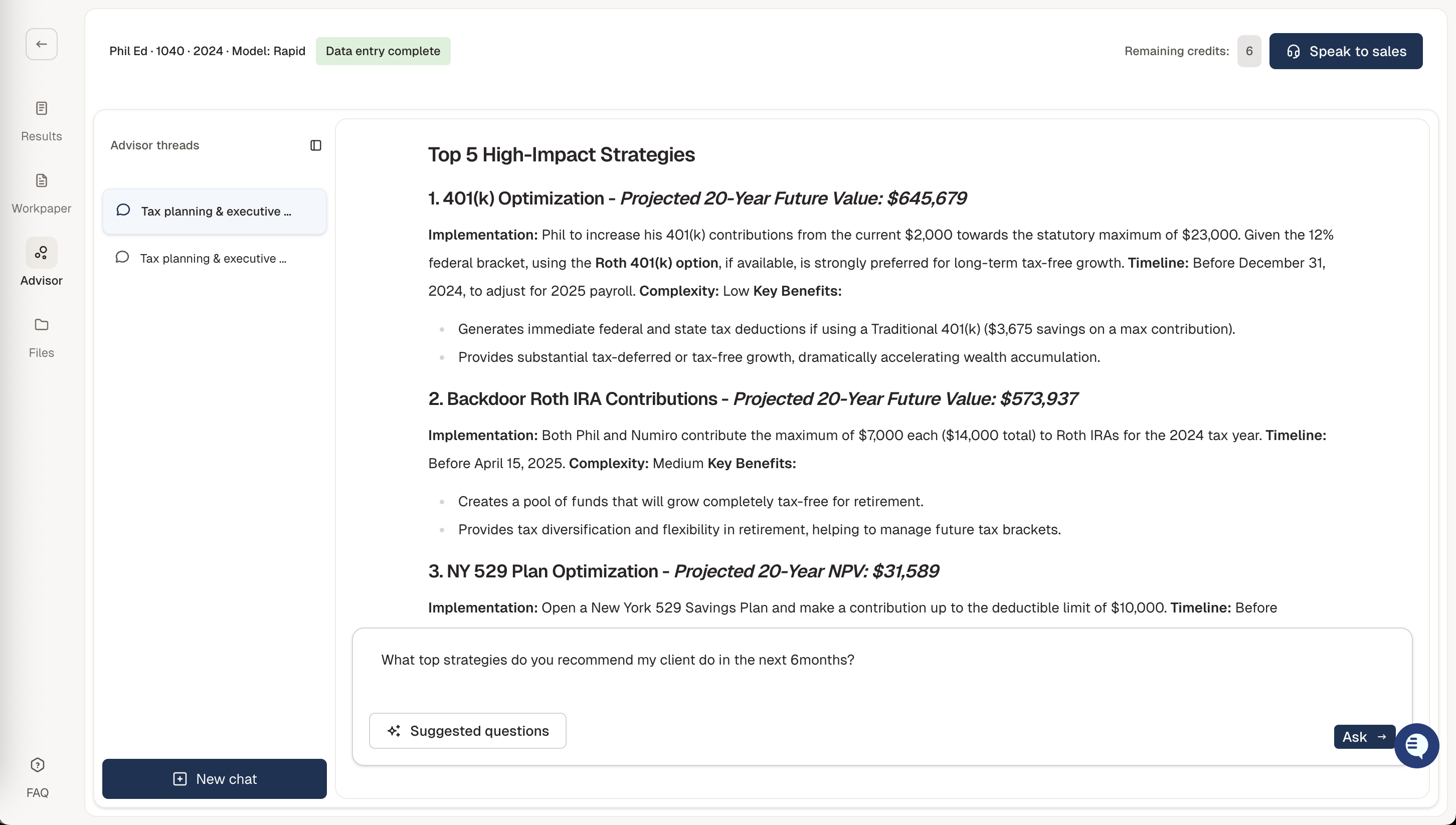
We designed Filed to reduce the number of hours it takes to complete a tax return. The idea here is that AI does the first draft of the tax return and then hands over the work to be polished and finished by a tax preparer. To do this effectively, the AI needs to not only do the work but also indicate where to glance through and what to pay attention to. We do this with the help of our AI workpaper. The workpaper is a way for the AI to handover and indicate what’s missing and where the preparer needs to pay attention to.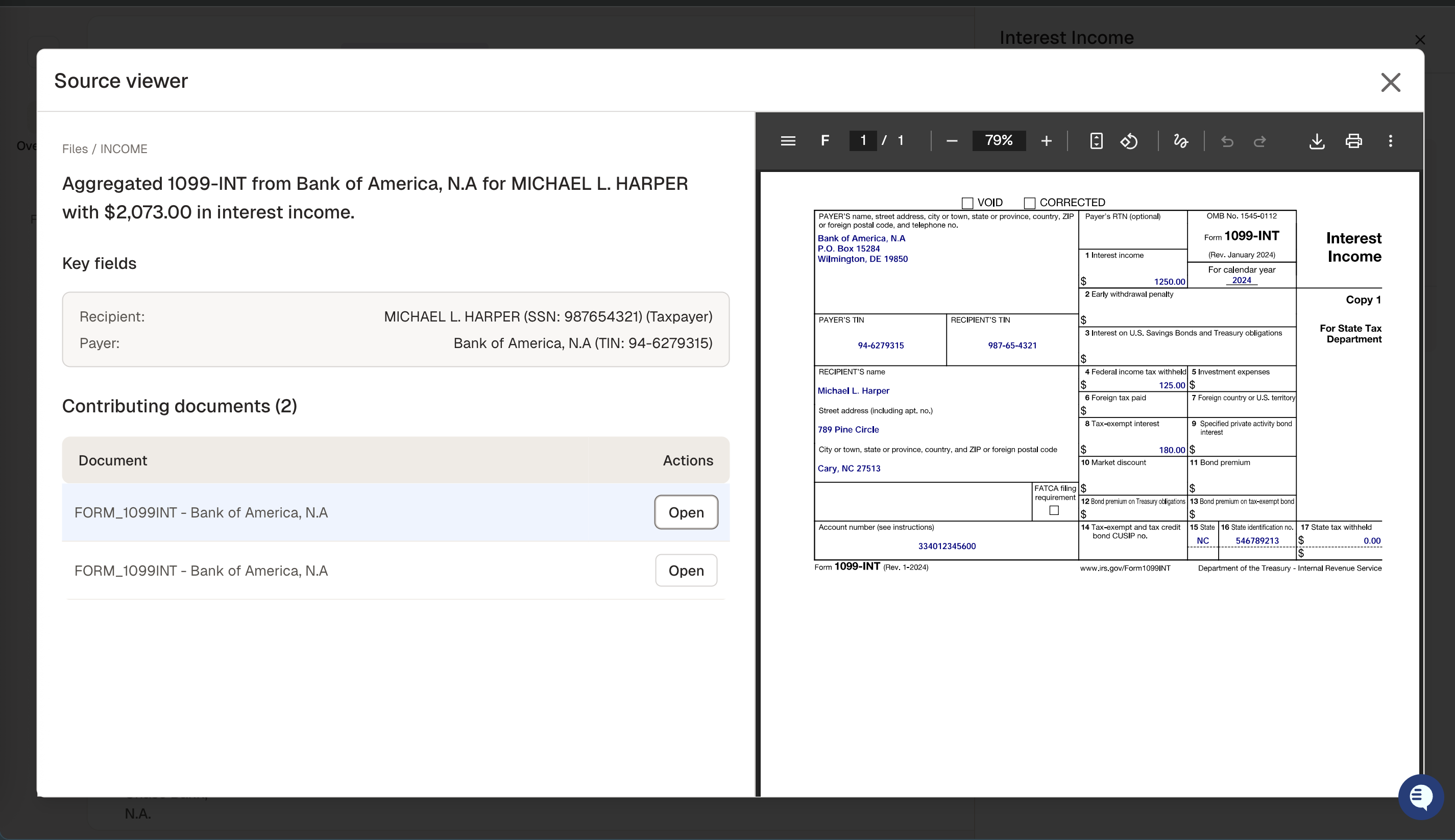
Benchmarks
We run our AI agent against rigourous real world test cases before releasing new updates.Filed achieved 72.5% strict accuracy on complete federal tax returns in Column Tax’s TaxCalcBench evaluation—more than double the performance of leading standalone LLMs (GPT-5: 41.7%, Claude Opus 4: 27.5%, Gemini 2.5 Pro: 32.4%)
- The key differentiator is Filed’s multi-agent architecture with layered validation and deterministic checks, not just the underlying models
- Generic LLMs struggle with tax accuracy, achieving only 23-42% on the benchmark, while Filed’s specialized system demonstrates that thoughtful architecture can substantially improve AI reliability
- Calculation represents just one phase of real tax work—Filed also handles document intake, data entry into professional tax software, and provides transparent workpapers for review
Read more about our benchmarks
See our blog post for more details
Atul R - CTO
December 2, 2025